
The Impact Of Clean Water On Health (Or: How Barnaby Maples Almost Died of Thirst Over an Oasis)
The transition from the mist-draped peaks of the Misty Ridge to the scorching expanse of the Sun-Scorched Basin was, in hindsight, Barnaby Maples’ worst strategic decision since the Great Goat Airdrop.
Barnaby had dragged his team to the desert following a fragment of a 14th-century map claiming the Sunken Well of the Desert Kings contained chests of gold coin. Instead, three days into the expedition, the heat had cracked their supply lines, their ground vehicle’s radiator had blown, and the expedition was stranded beside a dry salt flat with four gallons of murky, silt-heavy well water.
The Silent Crisis in the Dunes
While Barnaby obsessively scanned the horizon for ancient ruins, his expedition medic, Dr. Aris, was managing a far more urgent reality: dehydration and waterborne pathogens.
The nearby nomadic settlement of Dune’s Edge was facing the exact same crisis, but on a community-wide scale. The local water hole was contaminated with bacteria, leaving half the village bedridden with severe gastrointestinal illness.
Barnaby quickly learned that in the desert, gold means nothing compared to a functioning filtration unit and a clean supply line.
Airborne Filtration Logistics
Recognizing that ground transport across shifting dunes was too slow to save either his crew or the village, Barnaby pivoted his heavy-lift drones from survey mapping to emergency water sanitation and distribution.
Using his heavy-payload quadcopters, Barnaby launched an aerial pipeline operation, air-dropping portable solar-powered UV purifiers, ceramic filters, and sealed bladders of clean water across the basin.
| Intervention | Delivery Method | Health Outcome |
| Solar UV Purification Units | Heavy-lift winch drop straight to the village wellhead. | Reduced bacterial contamination in the primary water source by over 99% within 24 hours. |
| Electrolyte & Rehydration Packets | Low-altitude precision drops into central square. | Reversed acute dehydration in 40+ affected villagers and expedition members. |
| Sealed Gravity-Fed Filters | Parachute drop to isolated nomadic outposts. | Stopped the spread of waterborne pathogens across distant family camps. |
The Medical Reality of Clean Water Access
Watching the village recover in a matter of days reshaped Barnaby’s entire understanding of logistics. Access to clean water wasn’t just a convenience—it was the foundational baseline for all human health and community survival:
- Pathogen Elimination: Preventing waterborne diseases like cholera, dysentery, and typhoid reduces preventable illness in isolated communities by more than 80%.
- Nutrient Retention: Clean water ensures that food and medical supplies can actually be absorbed by the body rather than lost to chronic gastrointestinal distress.
- Systemic Resilience: Communities with reliable, clean water spend significantly less energy surviving, allowing them to focus on infrastructure, farming, and education.
A Different Kind of Wealth
Barnaby never found the Sunken Well of the Desert Kings. The “gold” indicated on his ancient map turned out to be a mistranslation of the ancient word for “freshwater spring.”
As his drones buzzed across the sunset-lit dunes—transporting clean water bladders between the revived outposts—Barnaby sat in the shade of a palms tree, drinking crystal-clear, UV-filtered water. He realized that finding ancient coins was secondary to a far greater discovery: sometimes the most valuable treasure in the world is simply a clean, cold glass of water.
The selected image is “Children stand by a water pump in a village” by Andrew Itaga. Unsplash identifies it as a photograph of children near a borehole and states that it is free to use under the Unsplash License.
Recommended WordPress settings
SEO description: Explore how reliable access to clean water can help prevent disease, improve hygiene, protect children and strengthen community health.
Title: The Impact of Clean Water on Health
Author: Simon Ben Gemmill
Category: Water & Community Development
Focus keyword: clean water and health
Featured image: Andrew Itaga / Unsplash
Tags: Clean Water, Water and Health, Safe Drinking Water, Waterborne Disease, Public Health, Sanitation, Hygiene, Children, Community Health, Global Water Access, Sustainable Water

The Impact of Clean Water on Health
By Simon Ben Gemmill
Clean water is one of the simplest foundations of good health, yet access to safe water remains a major challenge in many parts of the world. When communities gain reliable access to safe drinking water, the benefits can be seen not only in households but also in schools, healthcare facilities and the wider community.
Water is essential for drinking, preparing food, washing hands, cleaning homes and maintaining personal hygiene. When available water is contaminated or difficult to reach, each of these everyday activities becomes more difficult and health risks can increase.
The Danger of Unsafe Water
Contaminated water can contain disease-causing bacteria, viruses, parasites and other harmful organisms. People can become exposed through drinking water, food prepared with contaminated water, inadequate hygiene or contact with contaminated environments.
Waterborne diseases can have particularly serious consequences for young children. Diarrhoeal illnesses, for example, can cause dehydration and can become life-threatening when appropriate treatment is unavailable.
The problem is not simply the water itself. Poor sanitation and limited handwashing facilities can create additional routes through which infectious diseases spread.
What Changes When Safe Water Arrives?
A reliable source of safe water can change daily life remarkably quickly.
Families can use safer water for drinking and cooking. People can wash their hands more frequently. Children can attend school in healthier conditions, while healthcare facilities can maintain essential cleaning and hygiene practices.
These changes can contribute to measurable improvements in public health.
Clean water does not work alone, however. The greatest benefits occur when safe water is combined with sanitation, hygiene education, appropriate healthcare and reliable waste management.
Reducing Diarrhoeal Disease
Diarrhoeal disease remains an important global health problem, particularly among children.
Improved access to safe drinking water can reduce exposure to pathogens that cause diarrhoeal illness. Better sanitation and hand hygiene can provide additional protection.
For families, preventing illness can be as important as treating it. Avoiding an episode of serious diarrhoeal disease can mean avoiding medical costs, lost working time, missed school and the physical consequences of dehydration.
Protecting Children
Children are particularly vulnerable to the consequences of unsafe water and inadequate sanitation.
Repeated illness can affect attendance at school and place additional pressure on families. Severe infections can have much more serious consequences.
Providing reliable safe water gives families a basic tool for protecting children’s health.
A water project therefore has the potential to become much more than an infrastructure project. It can become an investment in children’s ability to grow, learn and develop.
Clean Water and Hygiene
One of the most important benefits of reliable water access is that it makes good hygiene practical.
Handwashing with soap at important times can help reduce the transmission of infectious diseases. But handwashing requires water.
If a family has to travel a long distance to collect a limited supply of water, using that water for hygiene may compete with drinking and cooking needs.
A nearby, dependable supply makes regular hygiene much easier.
Healthcare Depends on Water
Healthcare facilities also depend on safe and sufficient water.
Doctors, nurses and other healthcare workers need water for hand hygiene, cleaning equipment, maintaining sanitary environments and supporting patients.
A healthcare facility without dependable water faces additional challenges in maintaining infection prevention and control.
Improving water infrastructure can therefore support the wider healthcare system as well as individual households.
The Wider Economic Health Benefit
The health impact of clean water extends beyond medical statistics.
When people become sick less frequently, families may spend less time dealing with preventable illness. Parents can spend more time working or caring for their families, while children have greater opportunities to attend school.
Preventing illness can therefore produce benefits for both health and household stability.
Measuring the Difference
The impact of water improvements can be assessed through public-health indicators.
- Rates of diarrhoeal disease.
- Childhood illness.
- School attendance.
- Access to safe drinking water.
- Access to sanitation.
- Availability of handwashing facilities.
- Healthcare-associated infection risks.
- Time spent collecting water.
- Household healthcare costs.
These measures can help researchers, governments and communities assess whether a water intervention is achieving its intended results.
Clean Water Is Prevention
Modern healthcare often focuses on diagnosing and treating illness. Prevention is equally important.
Providing safe water can remove or reduce one important pathway through which people are exposed to disease.
This does not mean that clean water eliminates all illness. Communities still need healthcare services, vaccination, nutrition, sanitation and disease-prevention programmes.
But safe water provides a fundamental layer of protection.
A Long-Term Investment in Health
A dependable water supply should be viewed as long-term infrastructure.
Wells, pumps, treatment systems, pipes and storage facilities all require appropriate planning and maintenance. Water quality must also be monitored, and systems need to remain functional after their initial construction.
The objective should not simply be to provide water once. It should be to provide safe and reliable water over the long term.
Every Drop Can Matter
The relationship between water and health is easy to overlook when safe water is readily available.
Turning on a tap and receiving clean water can seem ordinary. For communities without that certainty, however, every journey to collect water and every decision about how limited supplies should be used can carry consequences.
Reliable access to safe water can help prevent disease, support hygiene and give families greater security.
Conclusion
Clean water is not a luxury. It is a basic foundation for public health.
When communities gain reliable access to safe water, they gain an essential tool for preventing disease, improving hygiene and creating healthier environments for children and adults.
The challenge is to make those benefits available to everyone.
Clean water cannot solve every health problem, but without clean water, many health problems become harder to prevent and control.
Providing safe and reliable water is therefore not simply about delivering water. It is about creating healthier communities and giving people a stronger foundation for the future.
Simon Ben Gemmill
Statoshi.co.uk
Photograph by Andrew Itaga on Unsplash . The Unsplash listing identifies the photograph as “Children stand by a water pump in a village” and states that it is free to use under the Unsplash License.
Air-Frieght Communities Featured Gound Support Relief Sea-Freight Support water
- Category 1 (7)
- Relief (6)
- Category 2 (6)
- Category 3 (7)
- Water (6)
- Category 4 (8)
- Communities (6)
- Uncategorized (6)
- Calender (6)
-
The Impact Of Clean Water On Health
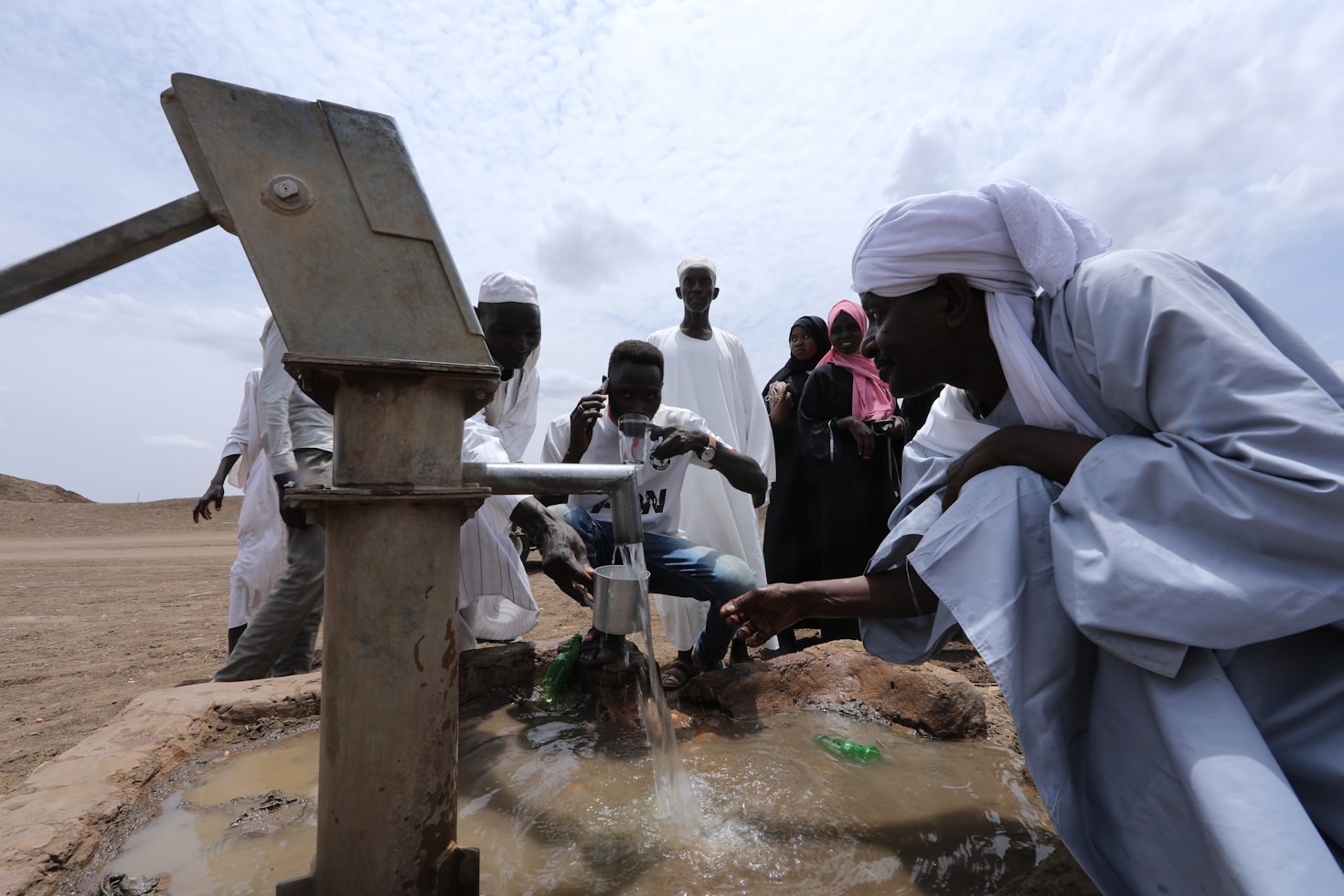
Featured-image credit The selected image is “Children stand by a water pump in a village” by Andrew Itaga. Unsplash identifies it as a photograph of children near a borehole and states that it is free to use under the Unsplash License. Recommended WordPress settings Title: The Impact of Clean Water on Health Author: Simon Ben…
Leave a Reply